
 EN
EN ES
ES












































































































Hazard Communication (HazCom) with the Globally Harmonized System (GHS) Training
- In accordance with Federal OSHA Regulations 29 CFR 1910.1200
- Available in:
 English |
  Español
 - Train at your convenience, across all devices
- Adaptable, self-guided course for mobile learners
- Receive your certificate right away once you complete the course
- Select from SCORM-ready, online streaming, virtual instructor-led sessions, or on-site course offerings
0.2
Bulk Buying
| Employee | Per Seat |
|---|---|
| 2-10 | $39.59 |
| 11-20 | $39.19 |
| 21-50 | $38.79 |
| 51-100 | $37.99 |
| 101-250 | $37.19 |
Course Facts


Training Duration

Learning Type

Course Access Validity

Device Support


Certificate Validity
Hazard Communication (HazCom) with the Globally Harmonized System (GHS) Training Course Syllabus
This OSHA Hazard Communication with GHS Training course consists of 4 lessons. Students are required to take each lesson in sequential order as listed below.
Introduction
Lesson 1: OSHA HCS Aligned with the GHS
- Explore the specific requirements of the Hazard Communication Standard (HCS).
- Examine how the alignment of HCS with the Globally Harmonized System of Classification and Labeling of Chemicals (GHS) enhances protection for American workers.
- Understand how this alignment reduces potential chemical exposures in the workplace.
- Identify the responsibilities of chemical manufacturers under the HCS.
- Review the duties of downstream users under the HCS.
Lesson 2: Hazard Classification
- Explain the types of chemical exposure.
- Describe the four routes through which chemicals can enter the body.
- Identify the various classes and categories used to group chemicals.
- Focus on the process of hazard classification.
- Highlight the key steps of the Hazard Communication Program.
Lesson 3: Chemical Labels
- Explain the requirements for using standardized hazard information on every chemical.
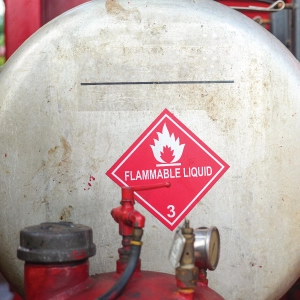
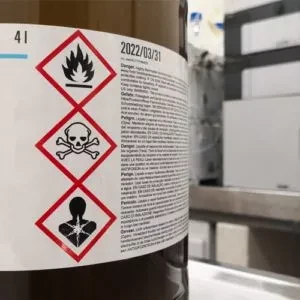
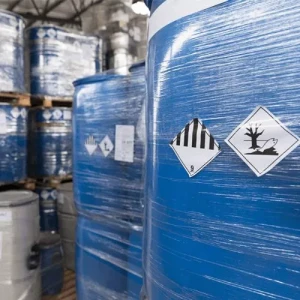
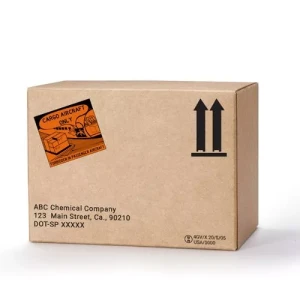
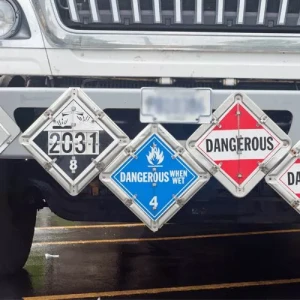
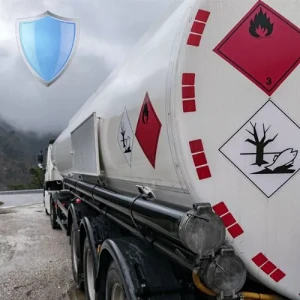
- Demonstrate how HCS pictograms and U.S. Department of Transportation labels make critical information easy to access for handlers.
- Describe in detail the different elements of hazardous chemical labels.
- Highlight other considerations for safe chemical handling in the workplace.
- Summarize the differences between hazard ratings under the HCS and other labeling systems.
- Compare the HCS system with the National Fire Protection Association (NFPA) and the Hazardous Materials Identification System (HMIS).
Lesson 4: Safety Data Sheets
- Examine the importance of Safety Data Sheets (SDSs).
- Explain the role of SDSs in maintaining workplace safety.
- Review the information contained within the 16 required sections of an SDS.
- Highlight how each section helps workers understand chemical hazards and safe handling.
Final Examination
Frequently Asked Questions
This OSHA Hazard Communication with GHS Training course meets and exceeds the compliance requirements of OSHA’s Hazard Communication Standard, 29 CFR 1910.1200.
- In 2012, OSHA updated its Hazard Communication Standard (29 CFR 1910.1200) to align with the Globally Harmonized System of Classification and Labeling of Chemicals (GHS).
- This training familiarizes workers who use or oversee hazardous chemicals with the changes to OSHA’s Hazard Communication Standard, including updated label elements and the Safety Data Sheet (SDS) format.
- Learners will gain the skills to interpret labels on chemical containers and locate critical information within the various sections of SDSs.
- The course also covers the physical and health hazards of different chemicals and teaches the proper precautions for managing them safely.
- As an integral aspect of workers’ “right to know” and “right to understand” the hazards of the chemicals they work with, all employees across industries who use, handle, or work with or around chemicals must understand the hazards associated with the various chemicals in their workplaces and the best practices for staying safe.
- All workers engaged in the manufacturing, import, and transportation of hazardous chemicals.
No, there are no prerequisites for this OSHA Hazard Communication with GHS Training course.
Certificate of Completion: Immediately after passing the final exam, you can download, save, or print your certificate in PDF format.
Validity: The course certificate is valid for three years.
Renewal: Simply take this course in 36 months to maintain compliance.
Choose Your Ideal Training Format:



SCORM Package


Virtual Instructor-Led
$199.00/Seat (minimum 10 seats)

Client-Site In-Person
$750.00/Seat (minimum 10 seats)



The ROI of Online Safety Training
Discover the value of our efficient alternative to live training, and calculate your return on investment.